Genuine, OE supplier, and aftermarket
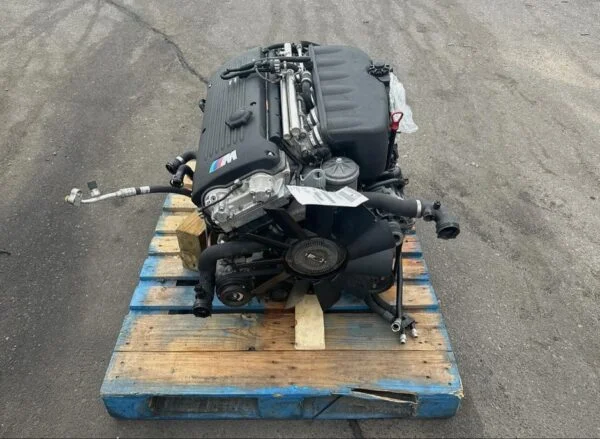
Rebuild parts come from three kinds of source. Genuine parts are sold in BMW packaging through the dealer network. OE supplier parts come from the companies that supply BMW’s production lines, sold under their own brand. Aftermarket parts are made by other manufacturers to fit the engine, and their quality ranges from excellent to unacceptable.
Genuine and OE supplier parts are often the same item in a different box, but not always. A supplier may sell an earlier revision, or a part made to a different specification for the independent market. The part number, checked against the VIN in the parts catalogue, is the reliable way to confirm that a part is the current revision for that engine.
Counterfeit parts exist, especially for popular engines and for parts with a well-known brand name. Buying from an established supplier with a clear returns policy reduces that risk. A price far below the usual market price for a critical internal part is a warning sign rather than a bargain. If in doubt, ask the supplier where the part was sourced.
Main and connecting rod bearings
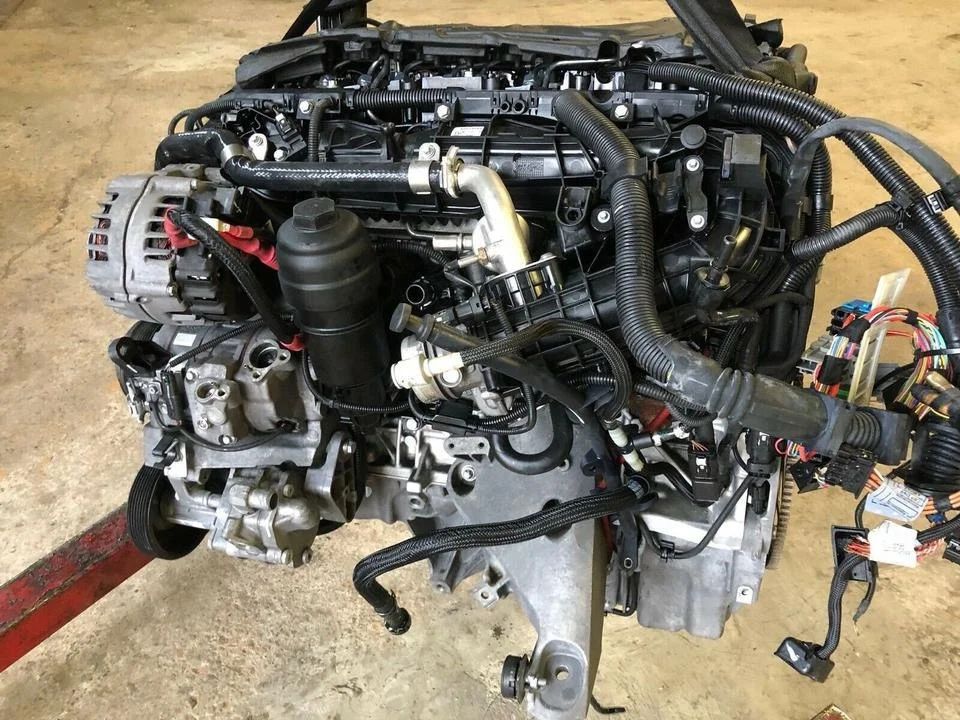
Bearing shells are the parts where quality matters most. On many BMW engines the main bearing shells are selected by size class according to markings on the crankcase and the crankshaft, so the correct shells depend on that individual engine. A rebuilder who orders a generic set without reading the markings is guessing at the clearance.
If the crankshaft has been ground undersize, the bearings must match the grind exactly, and undersize shells are not available for every BMW engine. Check availability before the crankshaft goes to the grinder. For some M engines, aftermarket bearing sets with different materials or clearances are sold as upgrades; fitting them means building to a different clearance specification, which the rebuilder must measure and accept deliberately.
Pistons and piston rings
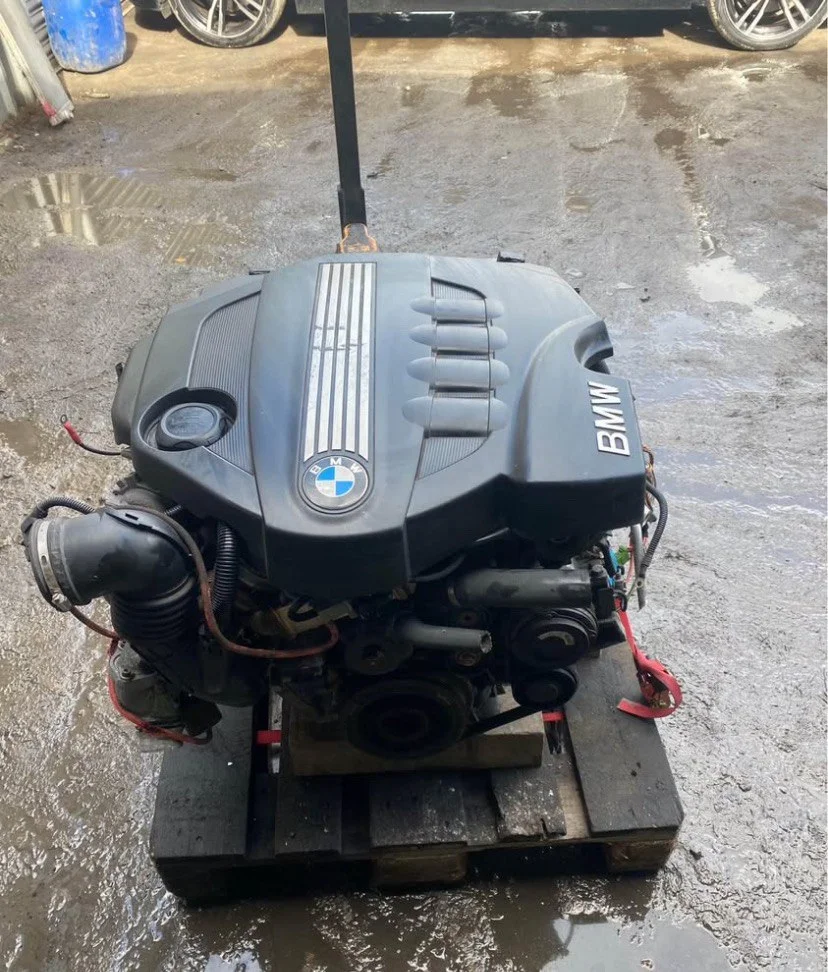
Standard-size pistons are only reused when the bores are within limits and the pistons themselves are undamaged, with clean ring grooves and no cracks at the crown or skirt. Rings are always renewed. Oversize pistons, where they exist for that engine, are bought as a matched set with their rings, pins, and clips, because the bore is machined to suit the actual pistons rather than a nominal figure.
Ring sets vary more than they appear to. The profile and coating of the top ring and the tension of the oil control ring affect how quickly the rings seat and how much oil the engine uses afterwards. A ring set designed for that engine, from a genuine or OE supplier source, is the safer choice. Ring end gaps are checked in the bore before the pistons are fitted, whoever made them.
Head gaskets, seals, and sealants
Modern BMW engines use multi-layer steel head gaskets. On many diesels the gasket is offered in more than one thickness, chosen by measuring how far the pistons protrude above the deck. Fitting a gasket of the wrong thickness, or one from a set that does not offer the choice, can bring the pistons too close to the head or change the compression.
Buy the gasket set from one quality source rather than mixing pieces, so that materials and coatings are consistent. Crankshaft oil seals with PTFE lips must be fitted with the correct installation tools and should not be oiled unless the instructions say so. Where BMW specifies a liquid sealant at a joint, use that type of sealant, applied thinly in the bead pattern shown in the repair information.
Timing chain kits
A timing chain is never replaced on its own in a rebuild. The guides, the tensioner rail, the hydraulic tensioner, and, where they show wear, the sprockets are replaced with it. A new chain running on worn guides or a worn sprocket wears quickly and can produce the same noise that prompted the work in the first place.
BMW revised the timing drive parts on some engines during production, the N47 diesel being the best-known example. A rebuild should use the current revision for that engine. Aftermarket kits vary widely: some use quality chains and guides, while others save money on the plastic guide material or the tensioner. Genuine or OE supplier parts are the safer choice for this job.
Bolts and fasteners
Many critical BMW fasteners are designed to stretch when tightened by torque and angle, and they are single-use. Cylinder head bolts and connecting rod bolts fall into this category on most engines, and some engines with magnesium or aluminium components use aluminium bolts that must always be renewed. Reusing them saves little and risks a joint coming loose.
Fasteners belong on the parts list with their own part numbers. Aftermarket high-strength fasteners exist for performance builds, but they are tightened to a different procedure from the originals. Using an aftermarket bolt with the factory torque-and-angle figures, or a factory bolt with the aftermarket figures, is an error that only shows once the engine is running.
Choosing part by part
A sensible rule is to buy genuine or OE supplier parts for anything inside the engine that can destroy it if it fails: bearings, rings, the timing drive, the head gasket, and fasteners. Quality aftermarket parts can be reasonable for external items such as covers, some hoses, and brackets, where a failure is visible and does not cause internal damage.
Keep every receipt and record the part numbers on the build sheet. That documentation is what separates a rebuild from an engine that was simply resealed, and it is what a buyer, a warranty assessor, or a later workshop will want to see. Bavarian Engines Werke states on each listing what was done to that unit, and buyers can ask about a specific listing by email.
Warranty
Many engines come with up to 12 months warranty. A proper workshop must fit the engine. The warranty is for a fault inside the engine. It does not cover the wrong engine, a dry start, the wrong oil, or damage done after you open the crate.
Shipping
Crate shipping from Hamburg costs 299 EUR. We pack the engine in a strong crate and send it to the address on your order. You need a forklift or an engine crane to unload it.
FAQ
Are OE supplier parts the same as genuine BMW parts?
Often they come from the same factory, but not always in the same revision. Check the part number against the VIN in the parts catalogue before ordering.
Should the timing chain always be replaced in a rebuild?
On a full rebuild the chain, guides, and tensioner are normally renewed together. Reusing them saves little compared with the labour of removing the engine again later.
Can BMW cylinder head bolts be reused?
On most BMW engines they cannot, because they are stretch bolts designed to be tightened once. Check the repair information for that engine code.
Do you ship oem vs aftermarket parts to my door?
Yes. Crate shipping from Hamburg costs 299 EUR to the address on your order.
How long is the warranty?
Up to 12 months on many engines, for a fault inside the engine, after a proper fit. See the warranty page for the full rules.
Are the photos of the real engine?
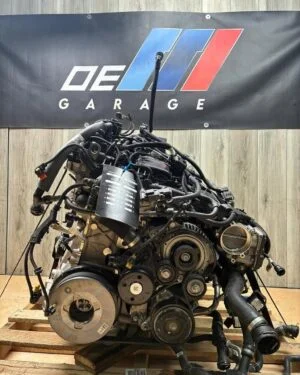
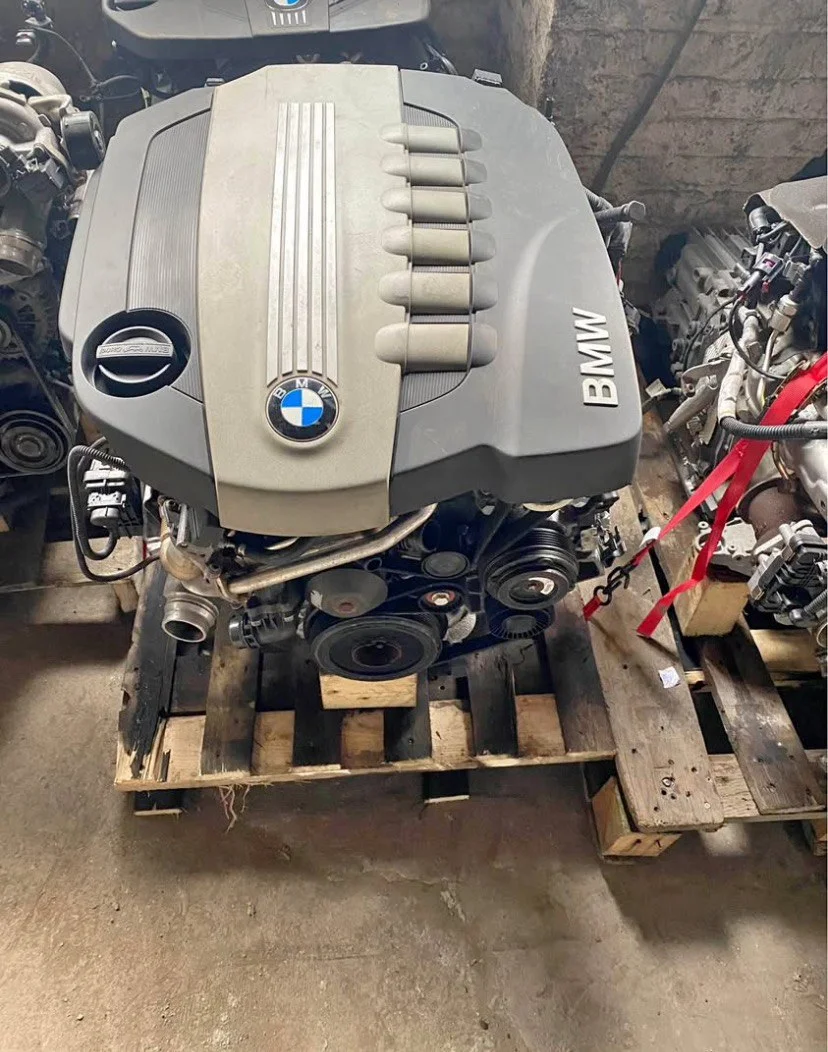
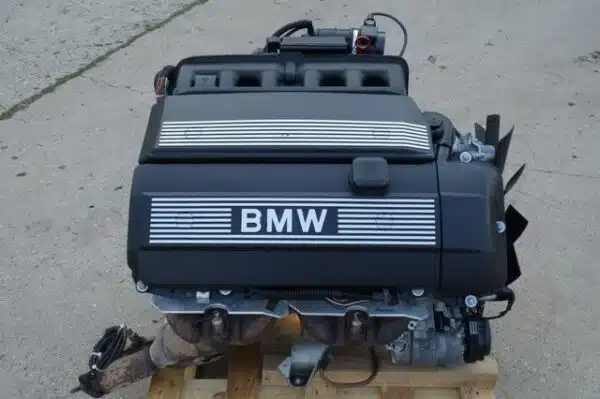
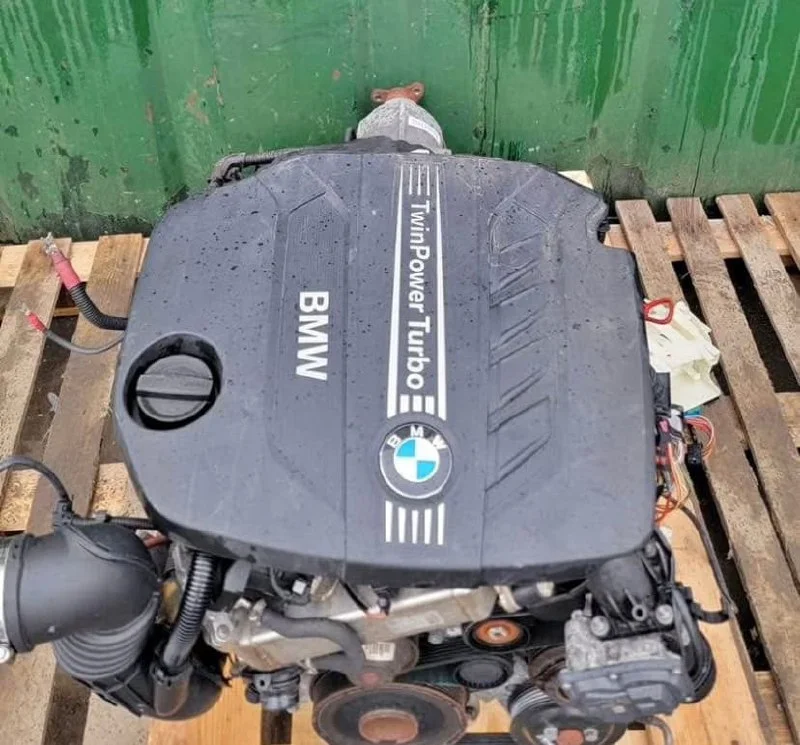
Yes. When you buy Bavarian Engines Werke engines from us, the photos are real photos from our yard, not made-up pictures.
Can you check my VIN first?
Yes. The VIN check is free. Send it before you pay and we confirm the engine fits.
BMW engines by codeFree VIN check